Karamoja is experiencing one of the most profound transformation periods in decades, driven by a combination of security improvements, infrastructure growth, and targeted economic empowerment programs. Between 2021 and 2026, government efforts have steadily repositioned the sub–region from a historically marginalized landscape to an emerging zone of opportunity, stability, and social investment.
Across Moroto, Amudat, Nakapiripirit, Nabilatuk, and Napak, citizens and leaders alike acknowledge a wave of progress touching nearly every sector of life. At the heart of this change is security. The Usalama Kwa Wote operations continue to deliver tangible peace dividends, drastically reducing the cattle rustling that once destabilized communities.
In Moroto alone, livestock raids fell dramatically from 93 cases involving 5,445 animals in 2023 to only nine incidents and 148 animals stolen in 2024, thanks to sustained security deployments and the establishment of military infrastructure. Communities also point to the construction of a permanent brigade headquarters in Abim and the opening of security roads across the sub–region as major contributors to restored calm.
Former warriors have been supported through reintegration efforts, including the distribution of 10,634 iron sheets to 409 beneficiaries in Moroto, reinforcing both peace and dignity. Education has also undergone a notable uplift. Access and enrollment indicators reveal steady progress, supported by major investments in school infrastructure. Region–wide, UPE enrollment rose from 86,335 learners in 2021 to 102,569 in 2025 .
Moroto district recorded a jump from 11,780 pupils in 2021 to 24,001 by 2025 . Government has constructed 110 UPE schools and nine seed secondary schools across South Karamoja during this period . A landmark development under way is the Gulu University Karamoja campus in Moroto, a UGX 39 billion investment that is expected to elevate access to higher education in the region . Although gaps remain especially in technical and vocational skills training — communities acknowledge that the education sector has seen more expansion in the last five years than at any point in recent history.Healthcare has followed a similar improvement curve.
Across the region, new maternity wards, theatres, outpatient departments, and staff houses have been constructed or upgraded. Moroto, Nabilatuk, Napak, and Nakapiripirit have all seen health centre improvements, including the elevation of facilities such as Iriiri Health Centre III to Health Centre IV status . Districts like Amudat now have new operating theatres and maternity wings, while ambulance support has become more consistent in remote areas. These investments, coupled with ongoing upgrades to rural health facilities, have expanded access to services for mothers, children, and emergency patients.
The infrastructure footprint across Karamoja has grown visibly. Major highways including the Soroti– Katakwi–Napak–Moroto Road and the Muyembe–Nakapiripirit Road have been completed or are nearing completion . In Moroto Municipality, 320 solar streetlights have been installed under the USMID programme, transforming night–time safety and commercial activity. Piped water systems now serve most town councils, while valley dams such as Nakoyen in Tapac Sub–county (constructed at a cost of UGX 8.1 billion) are expanding livestock and irrigation water access .
Water coverage has reached 84 percent in Moroto, a significant improvement for a traditionally water–stressed region. Economic empowerment programs have been one of the most transformative drivers of change. The Parish Development Model alone has injected UGX 62.02 billion into South Karamoja since 2021, directly benefiting 61,921 people in the region. In Moroto, individual success stories include beneficiaries like Nakoroi Sophia, whose goat project expanded from seven to twenty-six animals through PDM support . Emyooga enterprise support has boosted groups across all districts, with SACCOs in Moroto acquiring motorcycles and building savings — the municipal SACCO alone now boasts eighteen motorcycles and UGX 16 million in savings .
Youth livelihood and women empowerment programs have also continued to extend opportunities to vulnerable groups, reinforcing household income security. Industrial potential is beginning to take shape. Karamoja’s mineral wealth is drawing private capital, evidenced by ongoing cement and marble projects in Moroto. The Tororo Cement Factory under development is projected to employ over twenty thousand youth, positioning the district as a future industrial hub. Solar irrigation projects across sub–counties are enabling crop production in previously dry zones, marking a shift from purely pastoral livelihoods to combined agri–enterprise livelihoods.
The years ahead will require consistent focus on skilling, land dispute resolution, industrial expansion, and climate resilience. But for now, Karamoja stands as a testament to what sustained investment and peace– building can achieve in shaping a more prosperous and inclusive future.
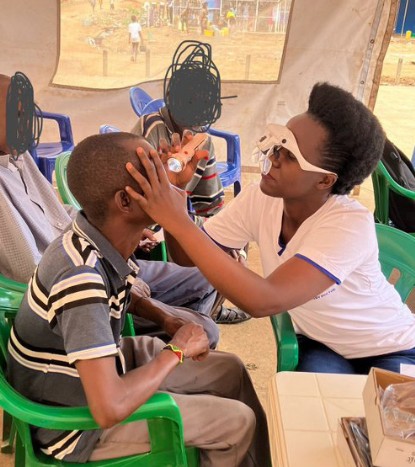
MOROTO HOSPITAL IMPROVES CATARACT OUTCOMES WITH BIOMETRY ROLLOUT Moroto, Uganda— Moroto Regional Referral Hospital has registered a major breakthrough in improving cataract surgery outcomes after successfully introducing routine biometry for patients in both hospital and outreach settings across the Karamoja sub-region.
The hospital, which serves more than 1.2 million people scattered across 27,000 square kilometres, began offering cataract surgery in 2018 after appointing its first ophthalmologist. Until recently however, most surgeries were performed without biometry the specialised eye measurements needed to accurately calculate the correct intraocular lens (IOL) power for each patient, a baseline audit conducted in June 2022 revealed that only 20% of cataract patients at the hospital received biometry, and none of the patients operated on during outreach had the test done.
As a result, just 50% achieved good vision on the first day after surgery, a figure far below World Health Organization recommendations To address this gap, the hospital launched a structured quality improvement programme aligned with the Ministry of Health’s National Quality Improvement Framework. Five eye-care staff members including ophthalmic nurses and clinical officers were trained in biometry, new equipment was procured, and standard operating procedures were introduced to ensure accuracy and consistency across both hospital and outreach interventions The facility also adopted monthly audit tools, strengthened equipment maintenance systems, and rotated trained personnel across outreach clinics to preserve skills.
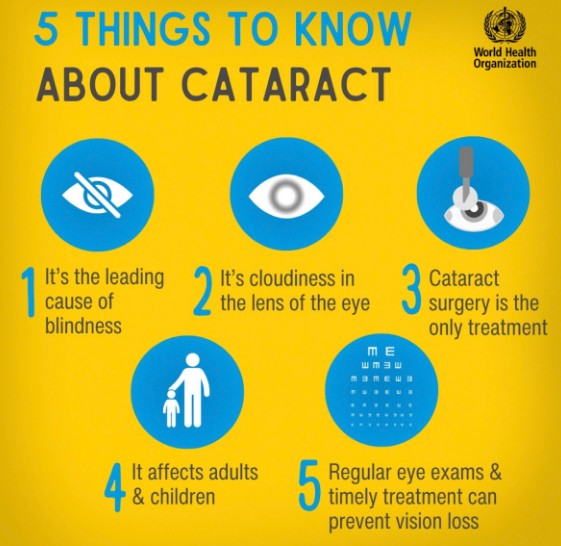
By December 2022, six months after introducing biometry, outcomes had started improving. And by March 2023, the transformation was clear: 675% of patients achieved good vision on the first day post- surgery 6Vision improved to 93% with pinhole testing 6Post-operative complications, especially posterior capsular tears, significantly reduced after surgical technique adjustments Although not yet at WHO’s target of over 80% good outcomes, hospital leadership says the facility is on track. The success has led to increased demand for cataract services, with Moroto now performing 10–15 surgeries weekly, up from previous averages.
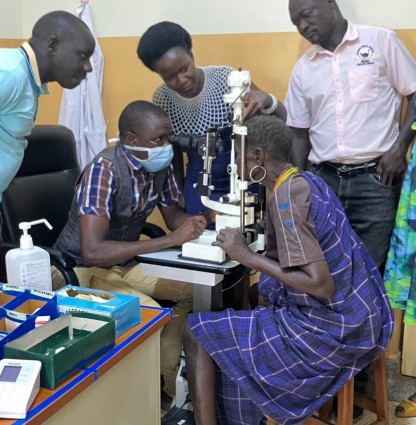
A recent satisfaction survey scored the eye unit at 67%, with most concerns linked to waiting time before surgery. Plans are underway to recruit additional staff to speed pre-operative assessment The hospital continues working with partners, including Sightsavers, to Slit lamp training successfully completed for ophthalmic clinicians from Abim, Kaabong, Amudat, Kotido, and Matany hospitals in October, 2025 secure a wider range of lens powers and ensure long-term sustainability. The Ministry of Health has also included IOLs in the National Medical Stores supply list, a move expected to further support availability Moroto’s initiative is now being recognised as a model for strengthening rural eye-health services, demonstrating how targeted training, audit culture, and community outreach can significantly reduce avoidable blindness in underserved regions of Uganda.